
BOTANICAL NAME:
Glycyrrhiza glabra
FAMILY:
Fabaceae
CLASSICAL CLASSIFICATION
– Charaka: Included in Kantakaryadi gana and Jivaniya gana
– Sushruta: Kantakaryadi gana
– Bhavaprakasha Haritkiadi varg
COMMON NAME:
Sanskrit – Yashtimadhu, Madhuka, Madhuyashti
Hindi – Mulethi
Bengali – Jethimadh
Tamil – Atimaduram
Telugu – Yashti
Kannada – Jeshthamadhu
Urdu – Mulhathi
REFERENCE:
BHAVAPRAKASH SAMHITA with link e Nighantu:
|
HABITAT:
Yastimadhu is the native to Southeastern Europe and cultivated in most of Europe. It is grown best in the hot, dry and sunny climates with yearly low rainfall. Whereas adequate soil moisture is necessary for its growth and development.
BOTANICAL DESCRIPTION:
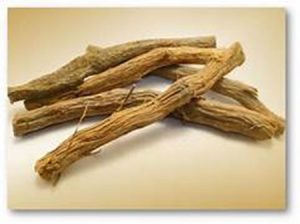
Yastimadhu (Glycyrrhiza glabra) is a perennial shrub, 6 feet in height with spikes bearing lilac-colored flowers with bean-like pods containing three or four seeds. Roots are long, wrinkled and brown in color. When outer skin of the shrub is removed there is a scaly yellow texture inside. From the basic root, secondary and tertiary roots originate. Leaves are conjoint, 70-150 mm long having 10-17 leaflets. Flowers are 8-12mm and pink to purple in color. Fruits are 20-30 mm, oblong pods and contain the 2-3 beans which are kidney-shaped.
AYURVEDIC CHARACTERISTICS
| RASA | GUNA | VEERYA | VIPAKA | PRABHAVA | DOSHGHNTA |
| Madhura | Guru ,Pichilam | Sheeta | Madhura | Vata-Pittahara |
AYURVEDIC ENERGETICS
| TASTE | PROPERTY | POTENCY | POST DIGESTIVE EFFECT | EFFECT ACTION | DOSHA ACTION |
| Sweet | Heavy, Sticky | Cold | sweet | Pacifices pitta and vata doshas |
MAJOR CHEMICAL CONSTITUENTS:
Glycyrrhizin, Glabridin, Liquiritin, Isoliquiritigenin, Flavonoids, Coumarins, Polysaccharides, and Saponins.
THERAPEUTIC USES
Kasa (Cough): Expectorant and demulcent
Shwasa (Asthma): Relieves dyspnea and irritation
Amlapitta (Hyperacidity): Soothes gastric mucosa
Vata-Pitta disorders: Balances and nourishes
Swarabheda (Hoarseness): Improves voice and tone
Vranaropana: Heals wounds
Rasayana: Promotes strength, immunity, and complexion
INDICATIONS:
Respiratory disorders (Cough, Bronchitis, Asthma)
Peptic ulcer, Gastritis, Hyperacidity
Voice disorders, Throat irritation
Adrenal insufficiency, Fatigue
Skin ailments, Wound healing
USEFUL PART: Root
DOSAGE:
Root powder: 2–4 g/day; Decoction: 40–50 ml; Extract: 250–500 mg