
BOTANICAL NAME: Psidium guajava
FAMILY: Myrtaceae
CLASSICAL CLASSIFICATION
Bhavprakash – Phala varga
ENGLISH NAME: Guava
COMMON NAME:
Hindi Name – Amrud
Sanskrit Name – Dridhabija, Peruk, Bahubeej, Amrutaphalam, Madhuramla, Peruka, Pita, Tuvara, Vastula
Malayalam Name – Malacka Pela, Pela
Telugu Name – Gova, Goyya, Jama, Pandu, Jama, Chettu
REFERENCE: BHAVAPRAKASH SAMHITA with link e Nighantu:
https://niimh.nic.in/ebooks/e-Nighantu/bhavaprakashanighantu/?mod=read
पीलुर्गुलफलः स्रंसी तथा शीतफलोऽपि च |
पीलु श्लेष्मसमीरघ्नं पित्तलं भेदि गुल्मनुत् |
स्वादु तिक्तञ्च यत्पीलु तन्नात्युष्णं त्रिदोषहृत् ||
HABITAT: Guava plants (Psidium guajava) grow in tropical and subtropical regions, and can be found in many places worldwide. They can be found in plains, sub-mountainous areas, and along roadsides
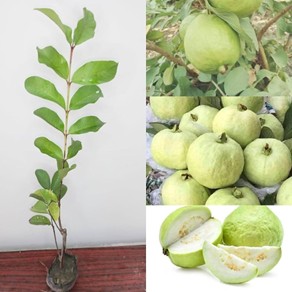
BOTANICAL DESCRIPTION:The guava has quadrangular branchlets, oval to oblong leaves about 7.6 cm (3 inches) in length, and four-petaled white flowers about 2.5 cm (1 inch) broad. The fruits are round to pear-shaped and measure up to 7.6 cm in diameter; their pulp contains many small hard seeds (more abundant in wild forms than in cultivated varieties). The fruit has yellow skin and white, yellow, or pink flesh. The musky, at times pungent, odor of the sweet pulp is not always appreciated
AYURVEDIC CHARACTERISTICS:
| RASA | GUNA | VEERYA | VIPAKA | PRABHAVA | DOSHGHNTA |
| Madhura, Amla | Guru, Teekshana | Sheeta | Madhura | – | Vatapitta shamaka. |
AYURVEDIC ENERGETICS:
| TASTE | PROPERTY | POTENCY | POST DIGESTIVE EFFECT | EFFECT ACTION | DOSHA ACTION |
Sweet, Sour | Heavy Sharp | Cold | Sweet | – | Reduces vitiated Vata and pitta dosha |
MAJOR CHEMICAL CONSTITUENTS:
Guava is one of the best sources of dietary fibers which are very much required by our body regularly. Besides it also has sugars, Lycopene, vitamins, beta–carotene, Iron, calcium, magnesium, manganese, zinc, sodium, potassium, and phosphorus
THERAPEUTIC USES:
- A fresh paste of Guava leaves can be applied to the painful joints to relieve swelling and pain.
- Decoction prepared from the leaves of the guava plant can help in bringing down fever.
- Boiling leaves of guava tree in water can help in treating oral problems such as toothache. It can be done by boiling 4 – 5 leaves of guava in a glass of water until only half the water is left in the vessel. It can then be simmered and used later for gargling.
USEFUL PART: Stem bark, leaves, fruits
DOSAGE:
Decoction – 10 – 20 ml.
Can be eaten as a fruit as per one’s appetite