
BOTANICAL NAME: Allium Sativum
FAMILY: Liliaceae
CLASSICAL CLASSIFICATION:
Charaka Samhita – Harita Varga
Kaiyadeva Nighantu – Oshadhi Varga
ENGLISH NAME: Garlic
COMMON NAME:
Sanskrit – Mlechagandha, Ugra Gandha, Rasona
Hindi – Lahasun
Kannada – Bellulli
Telugu Name– Vellulli
HABITAT:
Cultivated throughout India, mainly in Ludhiana, Karnataka, Tamil Nadu, Andhra Pradesh, U.P and Gujarat
BOTANICAL DESCRIPTION:
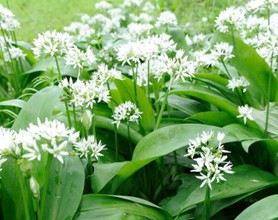
Allium sativum is a perennial plant growing from a bulb. Stem is erect and grows up to 3 feet tall. Short hard stems above the bulb give rise to 6 – 10 long dark green leaves. Leaf blade is flat, linear with acute apex. The bulb is odoriferous, white in color consisting of 10-20 edible bulblets called cloves. Whole bulb is covered with membranous skin. Flowers are greenish white or pinkish in color.
AYURVEDIC CHARACTERISTICS:
| RASA | GUNA | VEERYA | VIPAKA | PRABHAVA | DOSHGHNTA |
| Panchrasa | Snigdha, Guru, Teekshna | Ushna | Katu | – | Kaphavata shamaka |
AYURVEDIC ENERGETICS:
| TASTE | PROPERTY | POTENCY | POST DIGESTIVE EFFECT | EFFECT ACTION | DOSHA ACTION |
| Panchrasa | Oily Heavy strong | hot | Pungent | – | Reduces vitiated Kapha and vata dosha |
MAJOR CHEMICAL CONSTITUENTS:
Volatile oil, Alliin, Carbohydrates (arabinose, Galactose etc) and Vitamins (folic acid, Niacin, Riboflavin, thiamine, vit c)
THERAPEUTIC USES:
- Applying garlic paste improves blood circulation, relieves pain and inflammation.
- Garlic milk is used to cure bad breath.
INDICATIONS: Bulb, oil
USEFUL PART: Root, Fruit
DOSAGE:
Kalka – Paste 1-6 g in a single or divided dose per day.
Swarasa – Juice extract – 5 – 10 ml, once or twice a day.
Garlic oil 1-2 ml in single or multiple doze per day
AYURVEDIC FORMULATION:
- Lashunadi Vati
- Lashunadi Ghrita
- Lashunairandadi Kashayam