
BOTANICAL NAME: Malus domestica
FAMILY: Rosaceae
CLASSICAL CLASSIFICATION:
Bhavprakash Nighantu- Phal varga
ENGLISH NAME: Apple tree
COMMON NAME:
Sanskrit – Mushtipramana, Sevam, Sivitikaphalam
Hindi – Sev, Seb
Kannada – Sebu
Bengali Name – Sev
Gujarati Name – Sapharchand
REFERENCE: BHAVAPRAKASH SAMHITA with link e Nighantu:
https://niimh.nic.in/ebooks/e-Nighantu/bhavaprakashanighantu/?mod=read
मुष्टिप्रमाणं बदरं सेवं सिवितिकाफलम् |
सेवं समीरपित्तघ्नं बृंहणं कफकृद्गुरु |
रसे पाके च मधुरं शिशिरं रुचिशुक्रकृत् ||
HABITAT:
Apple trees thrive in temperate climates with cold winters and moderate summers. They require well-drained soil and at least 6 hours of sunlight daily. Commonly found in regions like North America, Europe, and parts of Asia.
BOTANICAL DESCRIPTION:
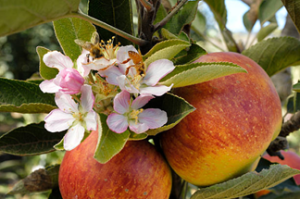
Malus domestica is a deciduous tree growing up to 2-4 metre height. Flowers are white in colour. Leaves alternate, dark green, oval, margins serrated and downy undersides. Fruits skin is red, yellow, pink , green or brownish in colour when ripe. Flesh of fruit is pale yellowish. The outter skin of the fruit is covered in a protective layer of epicuticular wax.
AYURVEDIC CHARACTERISTICS
| RASA | GUNA | VEERYA | VIPAKA | PRABHAVA | DOSHAGHNTA |
| Madhura | Guru Ruchikr | Sheeta | Madhura | Vatapitta shamaka |
AYURVEDIC ENERGETICS
| TASTE | PROPERTY | POTANCY | POST DIGESTIVE EFFECT | EFFECT ACTION | DOSHA ACTION |
| Sweet | Nourishes, Improves taste | Cold | Sweet | Balances Vata and pitta |
MAJOR CHEMICAL CONSTITUENTS: Apple fruit contains terpenoids, flavonoids, phenolic compounds and tannins
THERAPEUTIC USES
- Bark decoction is used in recurrent fever
- Roots are anthelmintic, relives burning sensation, induces sleep.
USEFUL PART: Fruit, Bark, Roots