
BOTANICAL NAME: Costus speciosus
FAMILY: Zingiberaceae
CLASSICAL CLASSIFICATION-
Charaka Samhita – Krmighna, Tikta skandha
Bhavaprakasha- Haritakyadi varga
ENGLISH NAME: Cane reed, Crepe Ginger
Sanskrit – Kevuka, Kembukam
Hindi – Kembu, Peyun
Kannada – Chengaluva
Tamil name– Ven kottam, Vasabu
Telugu name– Kevu Kanda
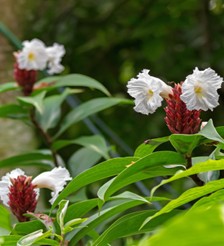
BOTANICAL DESCRIPTION:
Kembuka is a small plant growing to a height of 1- 3 m, resembling a ginger plant. The leaves are 6-12 inches long, slightly oval and 3-4 inches wide. The flowers are found in clusters, white in color with a reddish end and 2-4 inches long. They are seen during the rainy season. The rhizomes are slightly slimy, astringent in taste and used like vegetables in some parts of the Indian subcontinent. The plant is seen all over India especially in Assam, Bengal, Goa and parts of Maharashtra.
AYURVEDIC CHARACTERSTICS:
| RASA | GUNA | VIRYA | VIPAKA | PRABHAVA | DOSHGHNTA |
| Kashaya, tikta | Laghu, Ruksha | Sheeta | Katu | Kaphapitta shamaka |
AYURVEDIC ENERGETICS:
| TASTE | PROPERTY | POTENCY | POST DIGESTIVE EFFECT | EFFECT ACTION | DOSHA ACTION |
| Astringent Bitter | Light dry | Cold | Pungent | Reduces vitiated Kapha and pitta dosha |
MAJOR CHEMICAL CONSTITUENTS : The rhizomes contain Costusosides, Saponins- dioscin, gracillin and beta-sitosterol- beta-D-glucoside
THERAPEUTIC USES:
- The powder of the rhizome of Kebuka is given in a dose of 3-5 g with honey to treat cough and asthma.
- The powder of the rhizome is given in a dose of 3- 5 g with hot water to treat indigestion and anorexia.
INDICATIONS-
Jwara
Kushta
Kasa
Prameha
USEFUL PART: Rhizome
DOSAGE:
Powder- 3 to 6 g
Juice- 10 to 20 ml
AYURVEDIC FORMULATION:
- Asana eladi taila
- Krimighna Kashaya
- Nisoshiradi taila