
BOTANICAL NAME: Murraya paniculata
FAMILY: Rutaceae
COMMON NAME:
Hindi: Madhukamini (मधुकामिनी), Gacharisha
English: Orange Jasmine, Orange Jessamine, Mock Orange, Jasmine-orange
HABITAT:
An evergreen shrub or small tree, native to the Indian subcontinent and China and widely cultivated as an ornamental garden plant. It grows in tropical and subtropical environments and is commonly used for hedges and landscaping.
BOTANICAL DESCRIPTION:
Habit: Evergreen, bushy shrub or small tree; approximately 6–20 feet when mature, depending on growing and pruning conditions.
Leaves: Glossy, dark-green and generally alternately arranged; the leaves are aromatic when crushed.
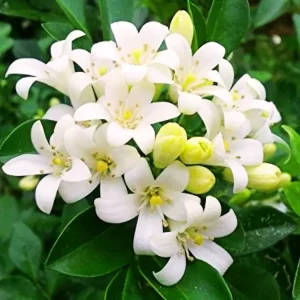
Flowers: Small, white, fragrant, star-shaped flowers occurring in clusters/panicles.
Fruit: Small berry-like fruits, becoming bright red-orange on maturity and attracting birds.
MAJOR CHEMICAL CONSTITUENTS:
The uploaded source mentions alkaloids and flavonoids among constituents associated with the plant’s reported medicinal activity.
For a proper pharmacognosy/phytochemistry entry, the individual compounds should be listed from a primary phytochemical source rather than inferred from this gardening source.
PROPERTIES
- Analgesic activity
- Anti-inflammatory activity
- Antimicrobial activity
INDICATIONS
- Toothache
- Minor wounds
- Insect bites
- Skin infections
- Digestive complaints
THERAPEUTIC USES:
- Toothache — leaves are used.
- Wounds and insect bites — leaves are used externally.
- Digestive complaints — roots are used.
- Skin applications — flower infusion has been used as a skin toner.
USEFUL PART:
- Leaves
- Root
- Bark
- Flowers
DOSAGE:
– Leaf Decoction: 40-50 ml
– Powder: 3-6 gm daily.