
BOTANICAL NAME: Polianthes tuberosa (now classified as Agave amica)
FAMILY: Amaryllidaceae (formerly Agavaceae)
CLASSICAL CLASSIFICATION:
Ayurvedic References: Not directly mentioned in classical Ayurvedic texts, but used in traditional perfumery and topical formulations for its cooling, aromatic, and aphrodisiac properties.
Traditional Category: Sugandha Dravya (Aromatic substance) / Gandha Varga.
SANSKRIT NAME:Nishigandha, Ratrirajni
ENGLISH NAME:Tuberose
COMMON NAME: Marathi: Rajanigandha
Gujarati : Rajnigandha
Tamil : Nilasampangi
Telugu : Dondapapta
Bengali : Rajnigandha
Urdu : Gul-e-Shabbo
Kannada :Sugandharaja
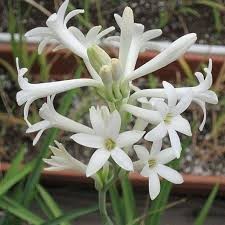
HABITAT: Native to Mexico; cultivated throughout tropical and subtropical regions of India—especially in Uttar Pradesh, West Bengal, Karnataka, and Tamil Nadu.
Grows well in loamy soil and warm climates. Extensively cultivated for essential oil extraction and floral decoration.
BOTANICAL DESCRIPTION:
Rajnigandha is a perennial bulbous plant with narrow linear leaves arising from the base.
The flower stalk grows 60–100 cm tall, bearing clusters of white, waxy, tubular, and highly fragrant flowers.
Flowers bloom at night and emit a strong, pleasant fragrance.
- Root: Tuberous (bulb-like), white.
- Leaves: Long, narrow, grass-like.
- Flowers: White, tubular, fragrant, in spikes.
AYURVEDIC ENERGETICS:
MAJOR CHEMICAL CONSTITUENTS:Essential oil components: Methyl benzoate, benzyl alcohol, farnesol, geraniol, nerol, eugenol, linalool, and indole. These compounds give Rajnigandha its characteristic fragrance and therapeutic aroma
THERAPEUTIC USES:
Manasika Shamana (Mind-calming):
The sweet and soothing aroma of Rajnigandha acts on the Manovaha Srotas (channels of the mind), promoting mental relaxation and tranquility. It helps relieve stress, anxiety, insomnia, and mental fatigue.
Hrudya (Cardiac Tonic):
Its fragrance has a Hrudya (heart-pleasing) effect — traditionally believed to uplift mood and provide emotional balance. It is used in aromatherapy for reducing palpitations and nervous tension.
Varnya & Twachya (Skin health-promoting):
Rajnigandha flower extracts are used in cosmetics and Ayurvedic skincare for their cooling, soothing, and complexion-enhancing properties. They help reduce skin irritation, redness, and inflammation
Shirahshoola Hara (Relieves Headache):
The flower oil, when inhaled or gently massaged on the temples, helps relieve tension-type headaches and migraines due to its calming and cooling nature.
Sugandha Dravya (Natural Perfume):
Extensively used in Ayurvedic perfumery, attar preparation, and incense, its natural fragrance is said to purify the atmosphere and uplift spiritual energy.
Vrishya (Aphrodisiac):
Rajnigandha’s warm, sensual fragrance has been traditionally regarded as a mild aphrodisiac, enhancing romantic and emotional well-being.
Shitaprashamana (Cooling effect):
The plant’s Sheeta Veerya helps soothe excess Pitta, providing relief from heat-induced irritability, fatigue, and burning sensations.
INDICATIONS:
- Manasika Vikaras – Stress, anxiety, depression, insomnia
- Shirahshoola – Tension headache, migraine
- Daha – Burning sensations due to aggravated Pitta
- Hrudroga – Emotional imbalance, mild palpitations, cardiac fatigue
- Twak Roga – Skin irritation, rashes, inflammation
- Klama – Physical and mental exhaustion
- Shoka & Chinta – Grief and nervous tension
- Vishranti-abhava – Restlessness, lack of relaxation
- Sukha Nidra-abhava – Disturbed or incomplete sleep
- Kama Mandya – Decreased libido (as mild Vrishya dravya)
USEFUL PART: Flowers (primarily), Bulbs (occasionally used)
DOSAGE: Flower decoction (Pushpa Kashaya) :10–20 ml
Essential oil (Attar / Taila) :2–5 drops (external use)
Flower paste (Pushpa Kalka):As required
Infused water (Pushpa Arka / Jal) :10–15 ml